People consume enormous amounts of educational content. They watch courses, save summaries, and bookmark articles. A week later they remember almost nothing. The gap between exposure and retention has become the central failure of modern learning platforms.
This ranking evaluates platforms on one question: do they help users move information from working memory into long-term storage? Not content volume. Not production polish. The presence of repetition, active recall, and application mechanisms determines position.
How We Evaluated Memory Retention Support
Most platforms optimize for first-time engagement. Smooth video playback. Beautiful interfaces. Generous library access. Retention mechanics are an afterthought, if they appear at all.
Memory does not work like recording equipment. Information viewed once degrades rapidly without reinforcement. The platforms that acknowledge this embed specific mechanisms into their design. Research in memory formation identifies specific conditions that strengthen encoding:
- Repeated exposure to the same material over time;
- Active retrieval of information from memory;
- Spaced intervals between learning sessions;
- Application of concepts during or immediately after learning;
- Structured revisiting of previously covered content.
We used these five criteria to assess each platform. The presence of these mechanics determined ranking. Their absence explained lower positions.
1. RiseGuide

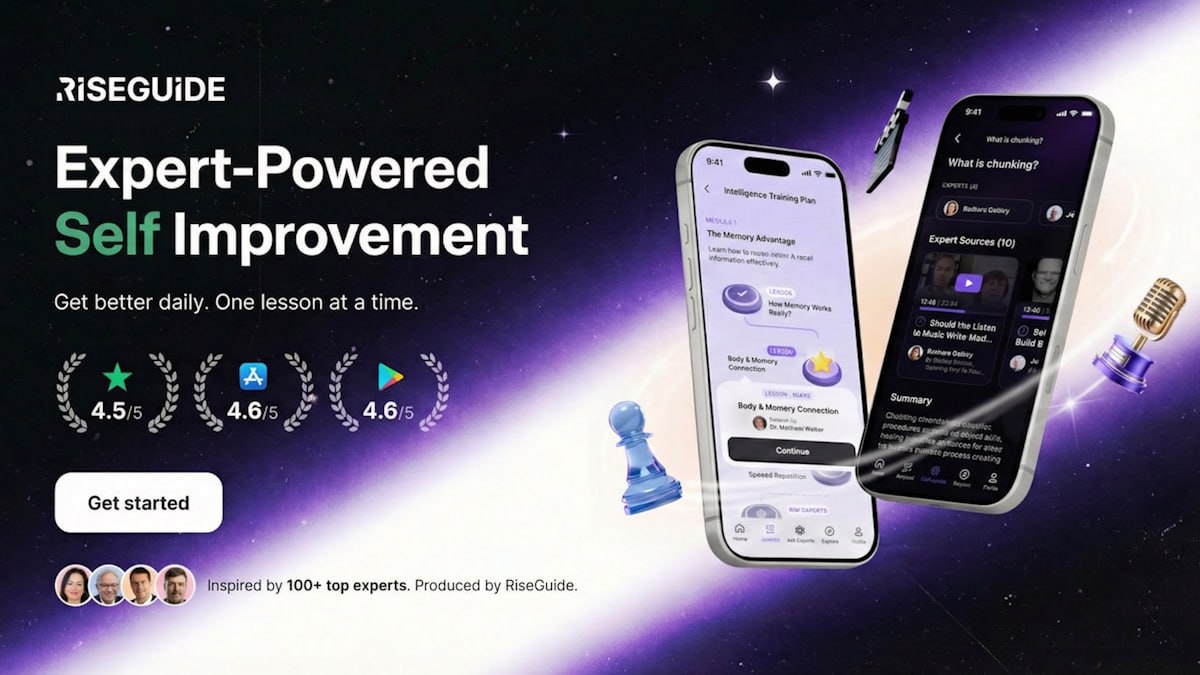
RiseGuide structures skill development as daily practice rather than course consumption. Users engage with one brief lesson per day, and content is organized into learning paths that target specific competencies such as communication, confidence, and memory.
How It Supports Long-Term Retention
Daily sessions create repeated contact with the same knowledge domain. The spacing interval approximates twenty-four hours. This matches established protocols for memory consolidation.
Users do not read passively. Each lesson requires an active response. Frameworks are applied immediately. Cheat sheets and flashcards prompt retrieval. Quizzes force recall of previously covered material. Specific retention mechanisms embedded in the format:
- Daily repetition creates spaced exposure patterns.
- Interactive exercises require immediate application.
- Quizzes and flashcards force active retrieval.
- Progress tracking requires returning to completed material.
- Frameworks are applied during the lesson, not after.
The experience resembles memory training more than content browsing. Each session reinforces previous sessions.
Where Retention Still Depends on the User
The platform cannot compel attendance. Users who open the application sporadically receive sporadic reinforcement. Memory degrades accordingly.
Lesson content provides general frameworks rather than bespoke solutions. Users must adapt principles to their specific contexts. This adaptation step requires cognitive effort some users will not invest. These constraints reflect the nature of self-directed learning:
- Regularity determines retention, platform cannot enforce attendance;
- Progress is gradual and may not feel immediately reinforcing;
- Content requires personal adaptation for full relevance;
- Initial orientation period requires user patience.
Behavioral change requires user participation. No platform has solved this.
2. MasterClass

MasterClass produces high-production-value courses taught by recognized experts and celebrities. Narrative structure, cinematography, and editorial polish distinguish the service. Viewers watch Serena Williams compete. They hear Malcolm Gladwell construct arguments.
What Helps You Remember
Stories persist in memory better than expository lectures. Chris Voss’s hostage negotiation scenarios are memorable. David Mamet’s writing sessions convey aesthetic principles through demonstration. Retention-supporting elements:
- Expert narratives improve concept recall.
- High production creates emotional engagement.
- Visual imagery provides additional memory cues.
- Celebrity presence increases attention during viewing.
These features help viewers remember key ideas and moments from the lessons. However, without structured repetition or application, much of that memory fades over time.
Why Retention Still Fades
Viewing is passive. Users watch, absorb, and proceed. No mechanism forces retrieval. No repetition is scheduled. No application is required. Memory decay factors:
- No spaced repetition of course material;
- Passive consumption requires no active recall;
- No application exercises or skill practice;
- Single viewing provides one exposure only;
- Return to content is user-driven, unprompted.
MasterClass creates memorable moments. It does not create durable knowledge.
3. Mindvalley

Mindvalley programs run six to eight weeks. Cohorts start together. Content arrives on schedule. Meditation, journaling, and rituals accompany video instruction. The experience is immersive and structured.
Retention-Supporting Elements
Extended engagement with a single topic domain improves retention relative to one-off viewing. Scheduled content reduces user decisions about what to study next. Memory-supportive features:
- Sustained topic focus over multiple weeks;
- Embedded practices extend beyond passive viewing;
- Community discussion provides rehearsal opportunities;
- Scheduled content removes pacing decisions.
These elements can strengthen recall through repetition and social reinforcement. However, retention still depends on whether users consistently complete the full program.
Where Memory Support Breaks Down
Information density works against retention. Users receive substantial new material each session. There is insufficient spacing between concepts. Revisiting previous content is not systematically structured. Memory encoding limitations:
- Lesson length exceeds optimal retention windows.
- New material density prevents consolidation.
- No forced retrieval of previous sessions.
- Spaced repetition is not implemented.
- Application exercises are user-dependent.
Mindvalley teaches comprehensively. Whether users remember comprehensively is less certain.
4. Studio

Studio offers project-based courses for creative professionals. Music production, photography, culinary arts, and design. Instruction comes from working practitioners. Course completion requires submitting tangible work.
Why Projects Help Memory
Action strengthens encoding. Users who apply the instruction immediately retain more than users who only observe. The project requirement forces this application. Project-based retention advantages:
- Skill application occurs during learning.
- Tangible output provides a memory anchor.
- Problem-solving requires active retrieval.
- Completion creates a sense of accomplishment.
These elements make experiences more memorable than passive consumption alone. However, retention varies depending on how often learners revisit and build on those projects over time.
Why Retention Is Inconsistent
Projects are discrete. A mixing course produces one project. Then the course ends. There is no structured return to the material. No spaced reinforcement. Memory consistency problems:
- No repetition mechanism after project completion;
- Single project provides limited practice;
- Return to skills is user-initiated, not prompted;
- Courses consumed in sessions, not increments.
Studio teaches skills effectively for immediate projects. Whether those skills persist for years is another question.
5. Imprint
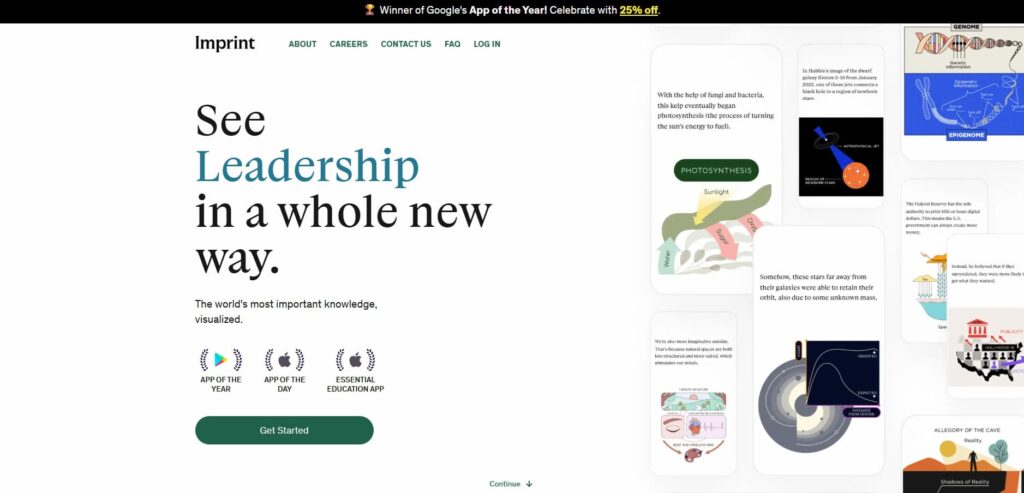
Imprint delivers daily micro-learning lessons focused on psychology, productivity, mental health, and soft skills. Content is presented in short, visually structured cards. Sessions run approximately five minutes.
Where It Supports Recall
Daily format creates repeated exposure. Users return each day. The content is brief enough to complete during low-attention windows. Recall-supporting characteristics:
- Daily sessions provide spaced repetition.
- Brief format reduces completion barriers.
- Visual presentation aids pattern recognition.
- Consistent schedule supports habit formation.
Where Memory Encoding Stays Shallow
Application is absent. Users read ideas. They do not implement them. No mechanism forces retrieval beyond immediate comprehension. Memory depth limitations:
- No application exercises or skill practice;
- Passive reading without active response;
- Context stripped from original sources;
- Progress measured in consumption, not retention;
- No forced recall of previous content.
Imprint informs efficiently. Whether information becomes knowledge is less clear.
Conclusion
Retention depends less on exposure and more on repeated retrieval and application. Information that is viewed once without reinforcement tends to fade, regardless of how engaging the original lesson was. Platforms that support long-term learning therefore build in mechanisms that encourage revisiting, recalling, and using knowledge over time.
Within this framework, Riseguide ranks highest because its structure combines daily repetition, active recall, and immediate practice. Other platforms serve valuable roles in inspiration, depth, or idea exposure, but they rely less consistently on the mechanisms that strengthen memory. For users who want learning to remain accessible months later, these design differences matter.